 Business License
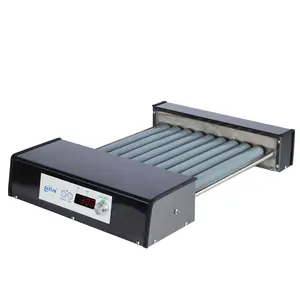
Characteristics of a Roller Mixer Adapted for Carbon Dioxide Incubators
To operate stably for a long time in a CO₂ incubator, a roller mixer must meet a series of special requirements to cope with the harsh environment of high temperature, high humidity and rich CO₂ inside the box.
The following are several core requirements that must be considered when choosing a roller mixer suitable for a CO₂ incubator:
??️ 1. Corrosion-resistant Materials and Construction
The internal environment of the incubator (37°C, humidity > 95%, 5% CO₂) is highly corrosive to ordinary metals.
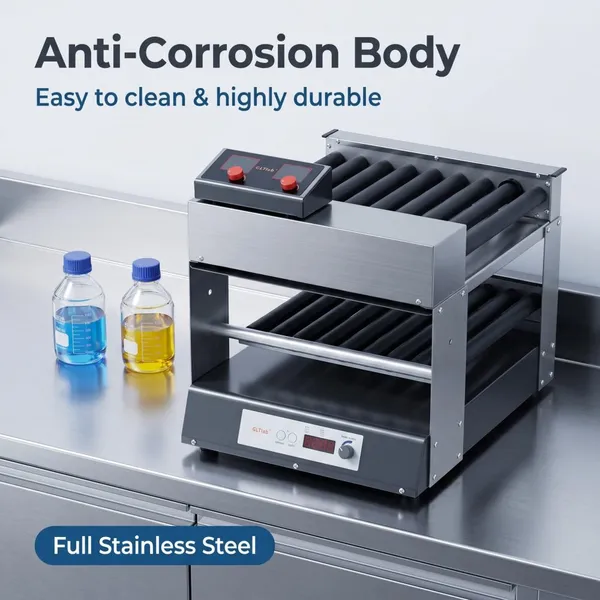
Shell and Structure: The outer shell and internal structural components of the equipment should preferably be made of 304 stainless steel or materials treated with special anti-corrosion coatings to prevent rust and corrosion, ensuring the equipment's lifespan.
Roller Material: Rollers are typically made of stainless steel covered with Teflon, silicone, or rubber, which are corrosion-resistant and can provide sufficient friction to drive the culture bottles to roll, while also avoiding scratching the bottle surface.
2. Electronic Components Adapted to High Temperature and High Humidity
High temperature and high humidity are the "killers" of electronic components.
Sealing and Protection: If the control unit is inside the box, its circuit board must have special moisture-proof and anti-corrosion coatings (such as conformal coating) and sealing designs to prevent condensation water from entering and causing short circuits or component damage.
Wide Temperature Operating Range: The equipment must clearly indicate that it can operate stably within an ambient temperature range of 4°C to 60°C, ensuring that performance is not affected within the set temperature range of the incubator.
?? 3. "Split" or "Remote Control" Design (Highly Recommended)
This is currently the most mainstream and reliable design solution, effectively addressing the lifespan issue of electronic devices in harsh environments.
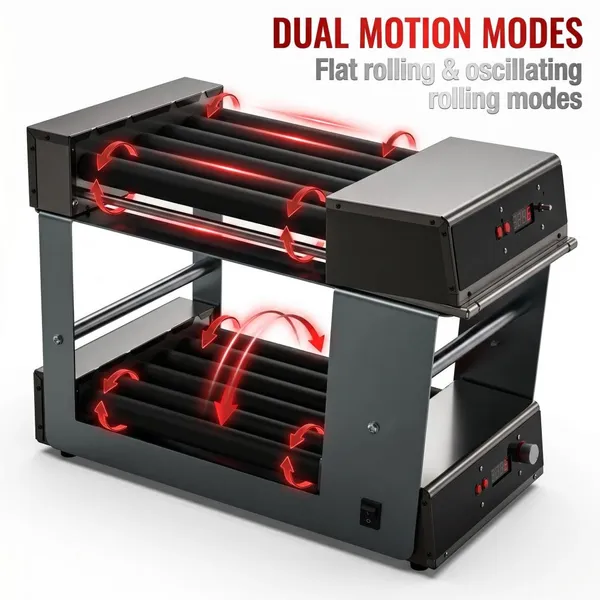
Separation of drive and control: Place the drive unit (containing only the motor and rollers) inside the incubator, while the controller (containing all precision circuits and display screens) is placed outside.
Advantages:
Extended lifespan: Protects precision electronic components from high temperature and humidity erosion.
Reduced contamination: The internal structure is simple, with no heat dissipation holes or complex circuits, making it easy to clean and disinfect, significantly reducing the risk of microbial contamination.
Convenient operation: Parameters such as speed and timing can be adjusted externally without opening the door, minimizing interference with the cell growth environment inside the incubator.
4. Dimensions and Internal Compatibility
Dimensional Fit: Before purchasing, it is essential to accurately measure the internal length, width, and height of the incubator to ensure that the shaker can be smoothly placed inside with sufficient space for culture flasks.
Unobstructed Airflow: The height and placement of the equipment must not block the internal air circulation channels of the incubator. Impaired airflow can lead to uneven temperature and CO₂ concentration distribution within the box, creating an unfavorable microenvironment for cell growth.
Load Capacity: It is necessary to confirm that the load capacity of the incubator's shelves can support the combined weight of the shaker, all culture flasks, and culture media.
⚙️ 5. Performance parameters meet the requirements of cell culture
Speed range: Cell culture typically requires very gentle mixing. The ideal speed range should cover 0.5 to 80 rpm and be capable of stable operation at low speeds.
Operation mode: It should support continuous operation and timed operation modes to accommodate different experimental protocols.
Gentle mixing: The equipment should provide smooth rolling or rocking motion to avoid generating intense vibrations or shear forces that could damage cells.
In conclusion, when choosing a roller mixer suitable for a CO₂ incubator, the key points are that the material should be corrosion-resistant, the electronic components should be moisture-resistant, a split design is preferred, and it is essential to ensure that its physical dimensions and performance parameters match your incubator and experimental requirements.
Recently Posted
-
Advantages of Melting Point Determination via Capillary Method
May 5, 2026The capillary method is a classic and most widely adopted technique for measuring the melting point of solid substances. Its statu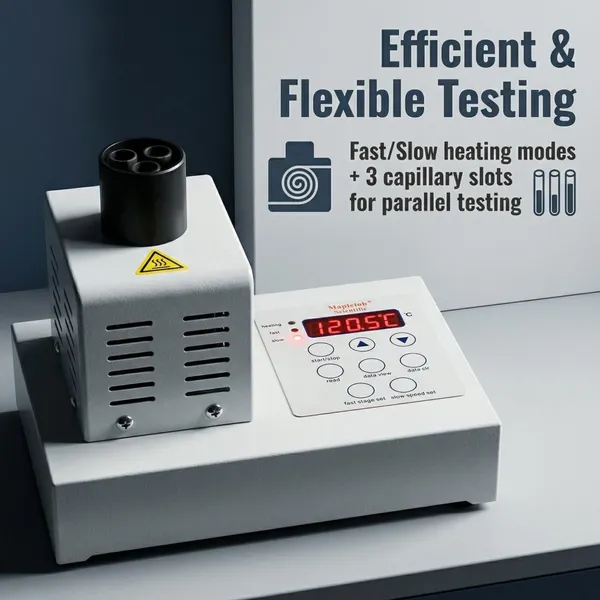 Read More
 -
Features of Multiple Synchronous Magnetic Stirrers
April 28, 2026The most core feature of the multi-channel synchronous magnetic stirrer lies in its powerful parallel processing capability. It ca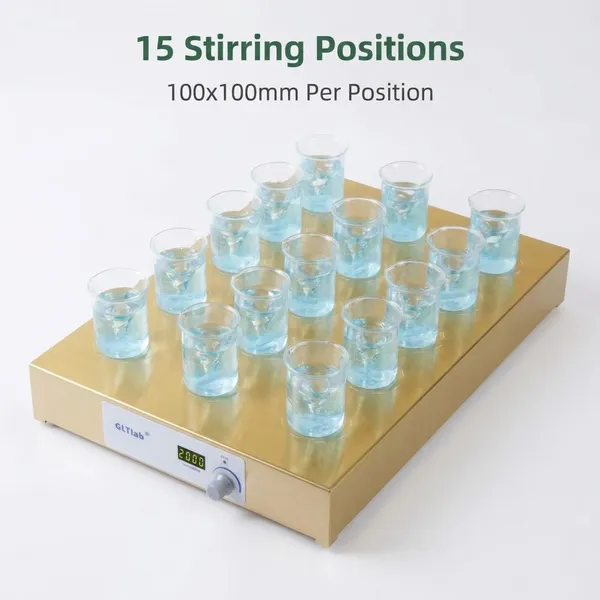 Read More
 -
The application of roller mixer in the pre-treatment stage of ICP
March 2, 2026Advantages of the Roller Homogenizer in ICP Sample Pre-treatmentThe roller homogenizer adopts a low-speed and gentle rolling homog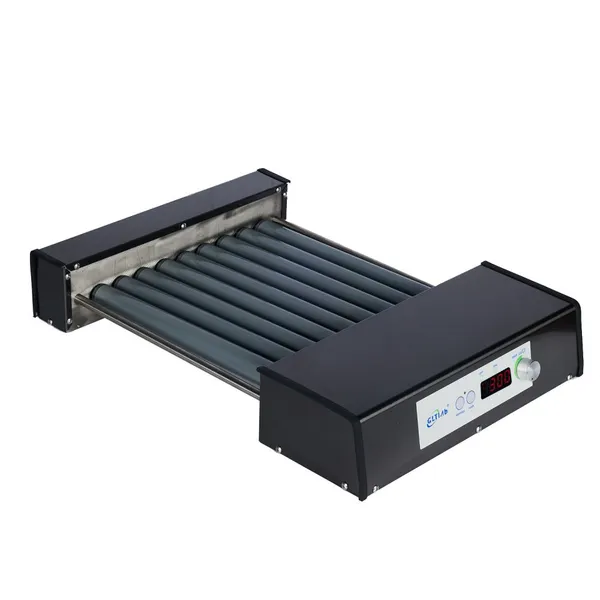 Read More
 -
The application fields of the roller mixer
March 2, 2026The roller mixer (roller homogenizer) achieves uniform mixing of samples through gentle rolling, without intense shearing. It is s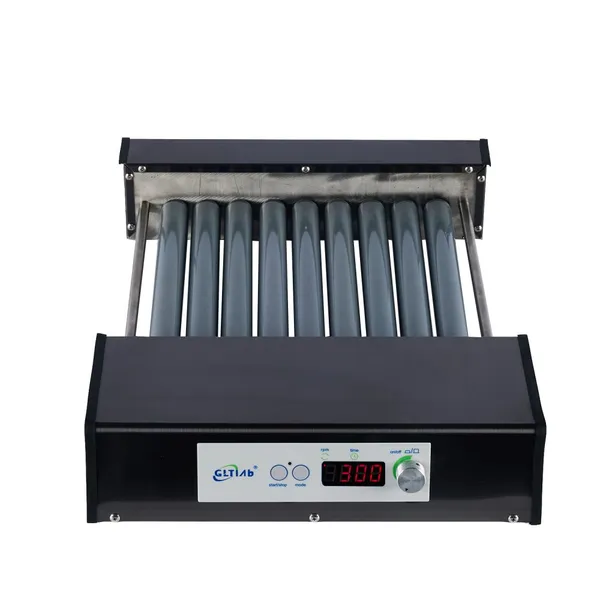 Read More

Contact Us
Recommended Products
-
 Four-piece Four-spoke Ceramic Plate Multi-position Heating Magnetic StirrerUS$ 560 - 650MOQ: 1 Piece
 -
Multi Position Magnetic Stirrer Without HeaterUS$ 520 - 600MOQ: 1 Piece
-
Multi-position Magnetic Stirrer HotplateUS$ 180 - 230MOQ: 1 Piece
-
3 Positions Magnetic Stirrer HotplateUS$ 229 - 299MOQ: 1 Piece
-
Long-axis Rotating Mixer From GLTLabUS$ 60 - 80MOQ: 10 Sets
-
Multi Position Magnetic Stirrer With HeaterUS$ 560 - 650MOQ: 1 Piece
-
GLTLab Digital Heating Equipment Aluminum HoaplateUS$ 110 - 150MOQ: 1 Carton
-
Digital 6'' Heating Plate With Ceramic Coated Aluminum Top PlateUS$ 100 - 150MOQ: 1 Combo
-
Roller Mixer With 20 RollersUS$ 700 - 800MOQ: 1 Piece
-
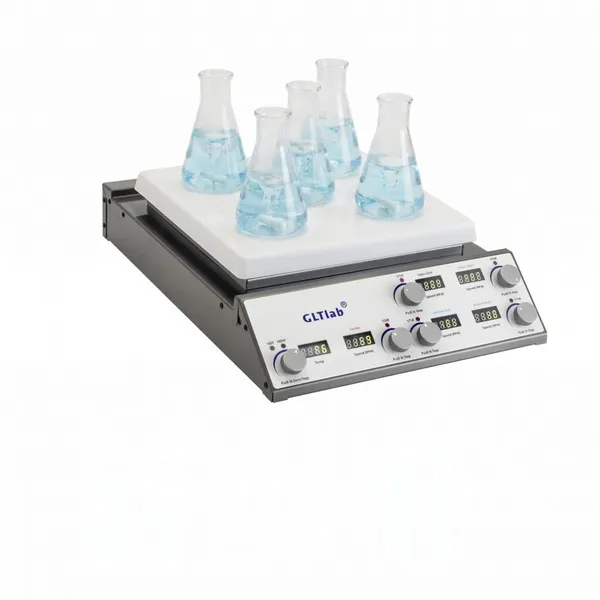
10-inch Multi-Function Digital Magnetic StirrerUS$ 499 - 600MOQ: 1 Set
-
3-channels Multi-position Heating Magnetic Stirrer Digital LED DisplayUS$ 400 - 500MOQ: 1 Piece
-
Digital 6-channel Magnetic StirrerUS$ 400 - 500MOQ: 1 Set
-
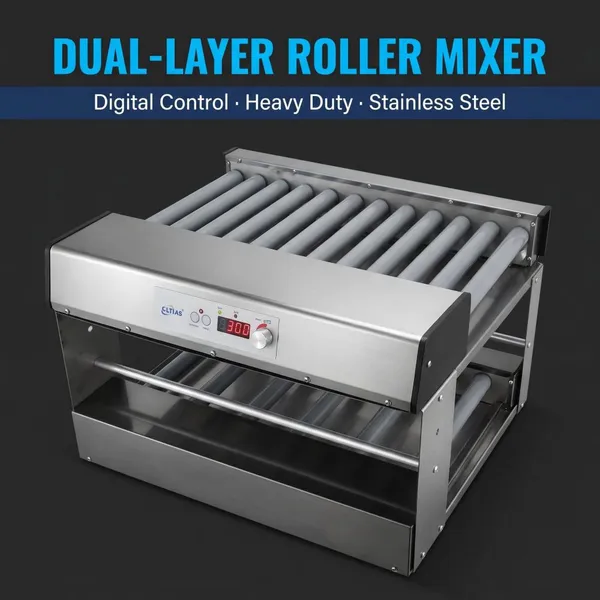
Dual-layer Roller Mixer With Support Frame and Network-controllable OperationUS$ 799 - 999MOQ: 1 Set
-
Digital Dry Block Heater With 3 BlocksUS$ 399 - 450MOQ: 1 Piece
-
Dual-module Laboratory Metal BathUS$ 260 - 300MOQ: 1 Piece